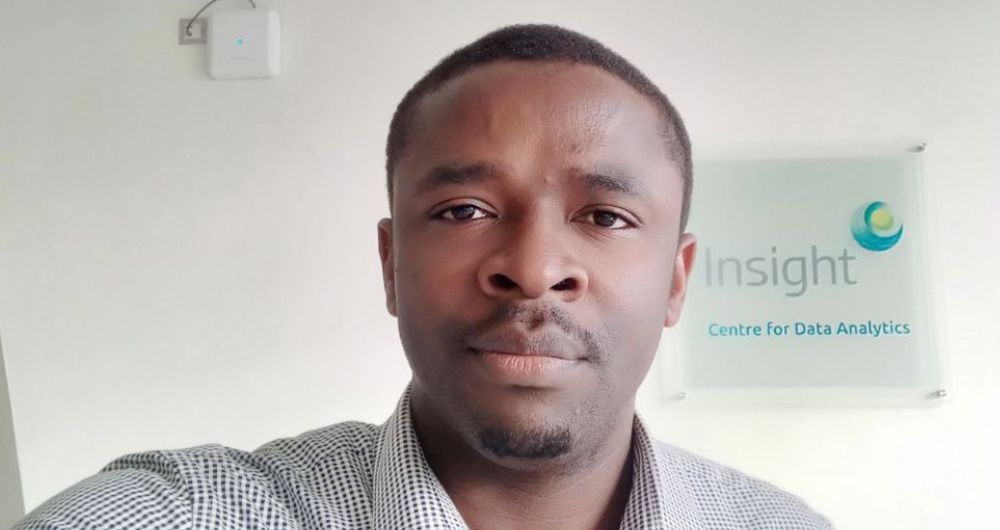
By Dr Timilehin Aderinola, Insight, University College Dublin
A few years ago, an older gentleman I know fell in his room at night. He was home alone and unable to get up for several hours. Fortunately, he managed to crawl to his phone and dial for help, but I can’t help but wonder: what would have happened if he couldn’t?
Children fall all the time; they get up, brush it off, and perhaps get a “boo-boo.” But for older adults, a fall is rarely just a scrape; it is often a life-changing event. According to the WHO, falls claim more than 680,000 lives annually and result in millions of disabilities. This places a major burden on health systems worldwide.
Some smartwatches and other wearable devices claim to detect falls, but most are trained on “simulated” data, that is, healthy actors voluntarily falling onto soft mats in a lab. But real-world falls are chaotic, messy, and unpredictable.
This mismatch results in devices that cry wolf with false alarms or, far more dangerously, stay silent when someone truly needs help.
Over the last two years at the Insight Research Ireland Centre for Data Analytics, our work has focused on closing this gap between simulation and reality.
First, we ditched the actors. By training our AI models on genuine, real-world fall data, we drastically reduced false alarms to as low as one every three days.
Next, we tackled the silence. We used a “cost-sensitive” approach that teaches the AI a crucial lesson: missing a fall is far worse than a false alarm. In our tests, this approach successfully detected all real-world falls while keeping false alarms low.
But we aren’t stopping at detection. We are now asking: “What goes before a fall?”
Imagine a wearable that doesn’t just call for help after you fall, but warns you up to 30 seconds before it happens. We are working toward a future where technology doesn’t just monitor us as we age; it actively protects us.
📄 Read the research:
[1] https://link.springer.com/chapter/10.1007/978-3-031-77066-1_4
[2] https://arxiv.org/abs/2509.11789
#DigitalHealth #HealthyAgeing #AIforHealth